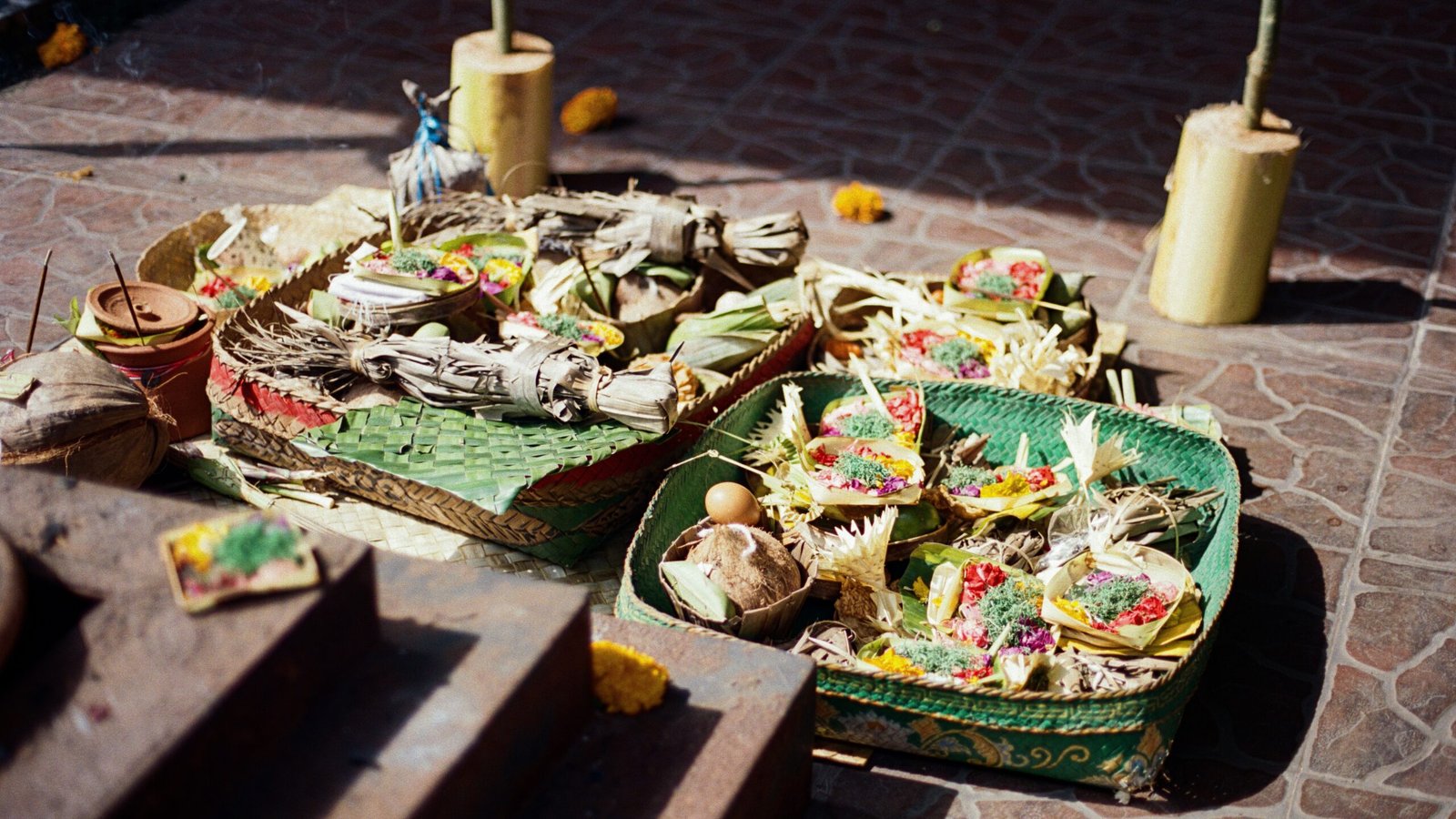

I’m missing the sacred smell of incense. Not the one I casually burn at home, but the one offered to the gods and spirits, carried by sacred incantations and a banten. The one that naturally fills the Bali air in the morning and again in the evening. I used to smell it everywhere. These days, I only find it far from the south.
I’m not saying it’s gone or that the Balinese have stopped making their offerings. People still do it every day in their homes, in temples, and in so many small parts of life. What I mean is that it used to feel more present. You would see offerings outside shops, along the sidewalks, at crossroads, in front of statues, on scooters, even on ATMs, offices, and restaurants. You name it. The island used to be full of them.
So when did it start feeling different?
Sometimes, when I ride my scooter through the roads in the Bukit, my heart aches. I pass the places that used to be little jungles, pockets of green that felt alive, now replaced by cafés, gyms, and the same recycled boutiques selling the same trending things. It feels like riding past the graves of trees I grew up with.
The rhythm shifted, slowly and inevitably, like a rising tide. From the Temple of Rudra to the rice terraces of Ubud, overtourism has worn itself into the island.
When I was growing up, everything was quieter, sacred, and slower. Mornings would sound like roosters, and I’d see elders walking barefoot, their faces warm with smiles. Now, I mostly encounter traffic, overdevelopment, and foreigners unfamiliar with local customs. Without time away from the island, overstimulation often replaces the calm I remember.
Then came the boom of social media, and with it a different kind of tourism, one that pushed Bali into rapid urbanisation, shifting its priorities from culture to commerce. Soon, digital nomads arrived, seeking long-term stays, trendy cafes, and fancy beach clubs, often pricing local families out of their own neighbourhoods.
Somewhere along that shift, the everyday rhythm of life changed for the Balinese, too. Families who once had the time to prepare offerings and attend ceremonies now spend most of their days working, serving visitors, or running businesses to keep up with the rising cost of living. Land that used to be green is slowly buried under concrete. Sacred offerings are trampled by scooters or mistaken for props by visitors. The island I grew up on now feels quieter… a quiet moulded not by peace, but by something missing.
The smell of incense is not gone. It is fading under the burden of what the island has become, a silent token of the culture and everyday sacredness that risk being lost to change.
Maybe the answer is not to turn back time but to pay better attention. To visit with care rather than in a rush. Listen instead of consuming; be present on the island and its traditions. Choose to support small, locally owned places whenever possible. Spend your money in community-run spots, not commercial beach clubs. Walk slowly and with intention, respecting your surroundings. Look up from your screens and notice the island around you. Treat ceremonies and shrines as sacred, never just scenery; ask before photographing.
Bali does not need saving. It needs remembering. Anyone who visits this island can support its traditions and spirit by making deliberate choices every day.


