I never watched the movie nor read the book, but one thing I know for sure is that Eat Pray Love influenced countless women (and men) to flock to Bali to ‘find themselves’. While I can’t blame it solely for the crisis we’re facing right now, I can’t help but wonder how different things might be if the book and the movie had never been published.
Like most Southeast Asian nations, Bali, a small island in Indonesia, largely thrives on tourism. Foreign visitors are both our primary economic driver and our biggest headache. Some seem to believe that once they’re here, they can do anything they want. But with over 16.4 million tourists in 2024 alone, our island is reaching a breaking point.
Bali’s connection to the outside world began in the 1910s, when the first foreign families settled on the island. They were mostly Dutch, arriving for colonial business… land, taxes, the opium trade. Tourism wasn’t part of the picture yet. It was only in the 1920s that the first curious visitors arrived, a small trickle that hardly left a footprint.
Back then, Bali was seen as a luxury exotic destination. Dreamy rice terraces, untouched coastlines, mystical temples wrapped in incense and ceremony. To the outsiders who first arrived, the island felt raw and otherworldly. Bali was a textbook paradise.
The first major shift came in the 1970s, when Bali finally became accessible. The expansion of Ngurah Rai Airport opened the island to the world in a way that had never been possible before. By the 80s and 90s, surfers and backpackers had found their way here. Cheap guesthouses, word-of-mouth travel, and dreamlike waves turned Kuta into a chaotic, youthful hub. The early 2000s changed everything again. Low-cost airlines and globalisation made Bali reachable for millions. By the time Eat Pray Love arrived, Bali was no longer a secret, but the island was about to be reframed in a different light.
Eat Pray Love didn’t introduce Bali to the world, but it sold the idea of the island as a spiritual sanctuary, a magical place where you could lose everything and rebuild your life in three months. What followed was a wave of yoga retreats, spiritual workshops, cacao ceremonies, ecstatic dances… you name it. People didn’t just visit anymore, they arrived with expectations. Eat Pray Love didn’t cause overtourism, but it amplified a particular kind of tourism, one that romanticised Bali while often overlooking its realities.
But the real issue was never just who came to Bali. It was how many. Bali is a small island with limited land, even more limited water, and fragile infrastructure. We were never designed to carry millions of visitors a year. The island’s roads, waste systems, and water supply simply weren’t built for this scale of tourism. As tourist numbers grew, development grew with them, often faster than regulations could catch up. For us locals, overtourism isn’t an abstract concept. We feel it every day. And that’s where the story becomes personal.
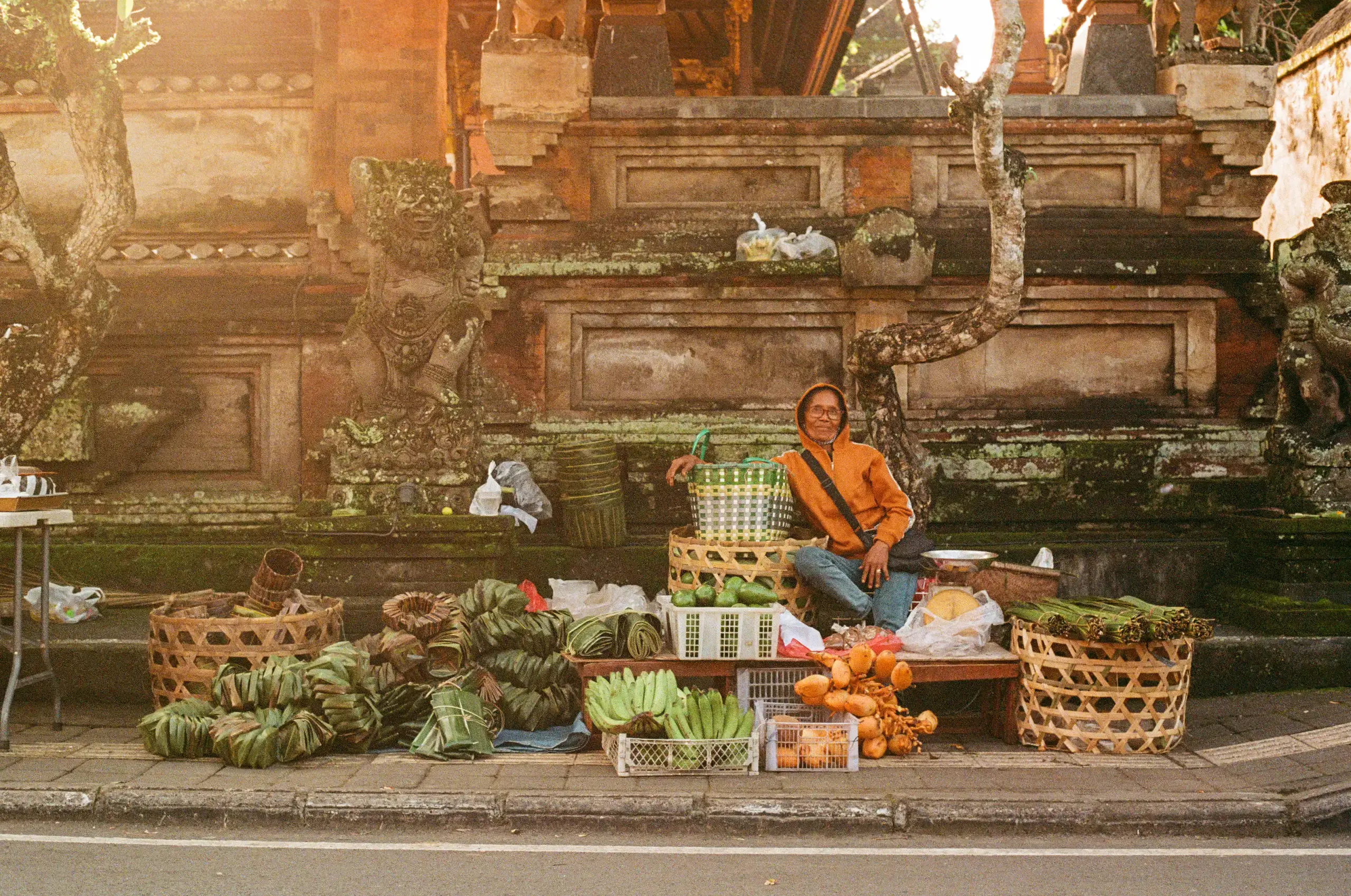
For those of us who have been here for more than a while, we have watched the island change faster than anyone could have imagined. The stretch from Kuta to Canggu has shifted the most, spreading further north into Kedungu, and east into Ubud and its surroundings, and now even the entire Bukit Peninsula is following the same path. Roads that were once quiet village streets are now clogged from dusk until dawn. Villas rise on protected green zones. Cliffs are carved away to make room for luxury developments. With each new project, it becomes harder for us to hold on to what makes this island home. Land that belonged to families for generations is being sold or pushed into development. The economy grows, but at what cost?
So when we ask whether Eat Pray Love caused overtourism, it isn’t really about the book. It is about everything we have lost along the way. None of this happened overnight. It was a gradual unraveling, one small shift at a time. A new airport here, a viral video there, a cheap flight, a wellness trend, a movie, a million Instagram posts. None of them destroyed the balance on their own, but together they reshaped the island into something unrecognisable.
Overtourism is not one event. It is an accumulation of moments, decisions, and narratives that slowly chipped away at what Bali used to be, while creating an image of what outsiders wanted it to be. And somewhere between those two versions, the real Bali, the one we grew up with, began to fade into the background.
In the end, overtourism was not caused by one book or one movie. It was everything, all at once. And somewhere in that swell, the Bali we grew up with began to get swallowed by the wave.


